How wearables are creating a new health system

digital health Aug 04, 2026
girl wearing smartphone on arm


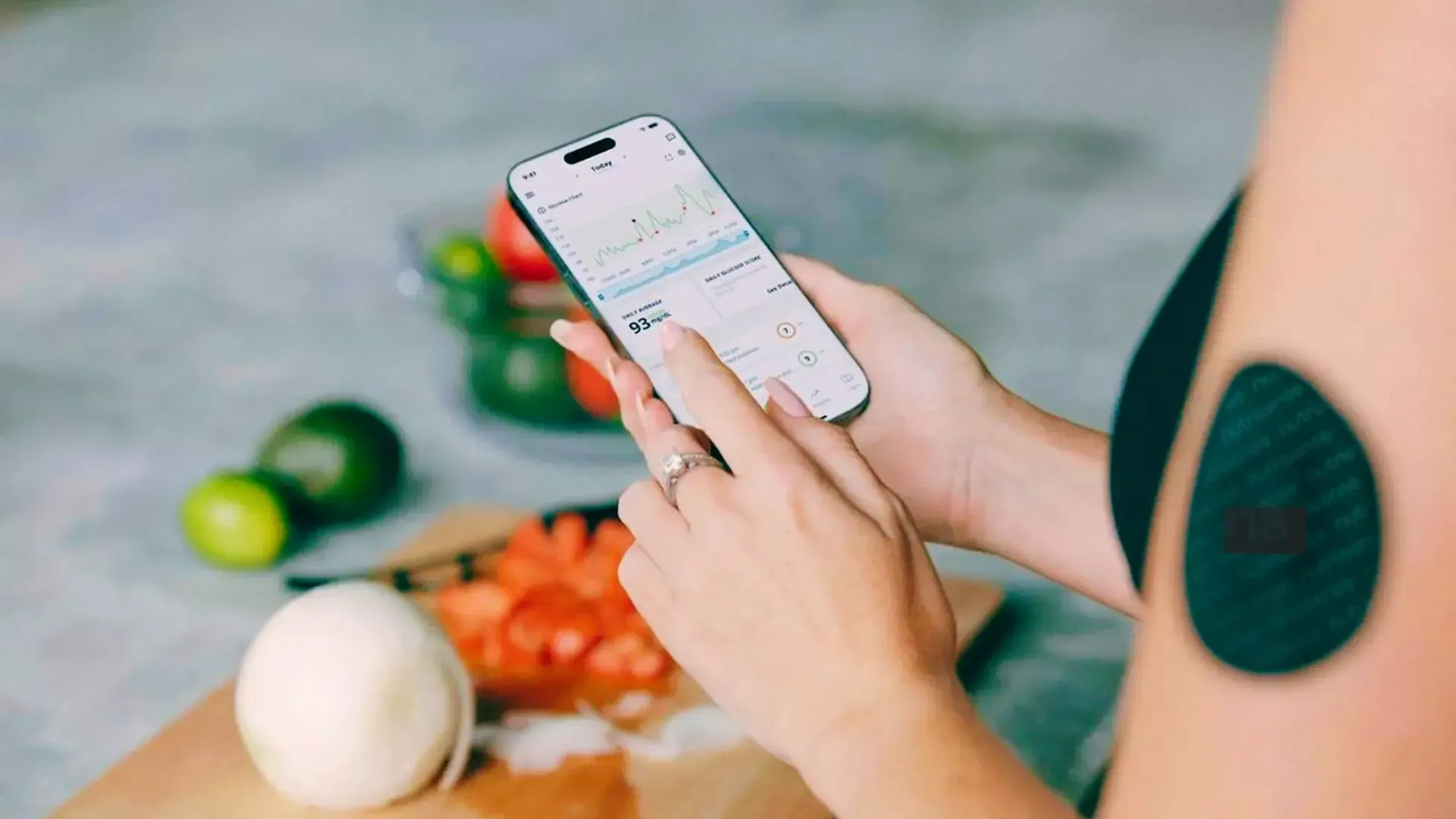
Wearables are becoming part of the operating system for a new kind of healthcare - one that is more continuous, more preventive, and far more connected. We recently exhibited at HLTH Europe where this shift was loud and clear. 

For executives across food, health, nutrition, ingredients, and digital health, this is not just a device trend. It is a market signal.


As Antoine Pivron, VP Health Solutions at Withings, put it:
“The conversation has fundamentally changed. It's no longer about whether wearable data has a role in healthcare, but about how to integrate it into routine care in a way that creates value for both patients and healthcare systems.”


That shift is already visible across the market.
 
Oura has moved beyond sleep and recovery tracking into a broader health ecosystem, integrating electronic health records, acquiring Veri, and then acquiring Galen AI, whose platform aggregates medical records, lab data, medications, and wearable data.
 
WHOOP is hiring doctors and integrating EHR through HealthEx so users can connect medical records with biometric data.

Fitbit, acquired by Google, is evolving further into Google Health, linking coaching, nutrition tracking, fitness records, uploaded medical records, and physician data-sharing.

And on the infrastructure side, companies such as Thryve Health are seeing the use case change fast.

As Friedrich Lämmel, CEO of Thryve, explained:

“A couple of years ago, most of our device integrations were with fitness apps. Today, the majority are chronic disease management, remote patient monitoring, and insurance.”


This is the real story.

Wearables are not simply becoming better wellness products.

They are becoming part of care delivery, risk management, prevention, and clinical decision-making.
 
Clinic management platforms are moving in the same direction. Semble, used by many NHS doctors in the UK, integrates wearables such as Garmin, Oura, and Apple Health to “support faster, more informed decision-making in consultations.” At the same time, non-invasive technologies such as Persperion are expanding what can be measured remotely, including metabolites, electrolytes, hormones, and drugs from a fingertip.


Withings is another sign of where the market is going. Its offer now extends beyond watches into connected scales, urinary tracking devices, sleep analysers, and clinician-facing solutions connected to consumer apps.
 
Pivron captures the scale of the shift clearly:
“Rather than a new industry, we’re seeing the emergence of a new model of healthcare”
 
And that new model has an important implication for every business operating at the intersection of food, health, and technology:
“For decades, healthcare has mainly focused on treating disease once symptoms appear. Connected devices are helping shift that model towards prevention by providing continuous health data outside traditional care settings. The value lies in helping people understand their health sooner and supporting earlier intervention where needed. That's what I would call preventive, connected care.”


That is why this seismic shift matters far beyond Medtech.
 
If healthcare is becoming more continuous, the winning opportunities will not sit in isolated products. They will sit in ecosystems: the products, services, data layers, engagement tools, and partnerships that help people act on health insights over time.


For brands, that opens up a different innovation agenda. One that crosses food, ingredients, pharma and healthcare.


It is no longer enough to ask whether a product fits into wellness: The better question is whether it can create value inside a preventive, connected care model.

We are already seeing early signals of that shift. Withings has partnered with Novo Nordisk. WHOOP is moving closer to clinical credibility. Platforms are linking medical records with behavioral and biometric data. The market is reorganising around interoperability, outcomes, and trust.


Lämmel puts it bluntly:

“When a player like Whoop starts integrating doctors and EHR, it means the entire wearable industry is no longer competing on step counts and sleep scores; we are talking about competing on clinical trust.”


That point should resonate strongly with leaders in food and health.


Because the next growth phase will not be won by collecting more data alone.

It will be won by translating data into outcomes that clinicians trust, consumers sustain, and partners can build on.


And the scale of data now available is changing what is possible:
“Wearables are generating loads of real-time health data at a scale that clinical trials and hospital visits simply cannot match. A patient seen by a doctor twice a year generates far less actionable data than a patient wearing a device 24/7.”


This creates a major opportunity for companies willing to invest in real-world evidence, longitudinal tracking, behaviour support, and personalisation.
 
That matters for product development. It matters for adherence. And it matters for chronic disease management, early diagnosis, and preventative care.


But there is still a credibility hurdle.
 
Accuracy remains a live issue in wearables. Different devices still use different sensors, algorithms, and calibration methods. A PLoS ONE study in 2026 found that Fitbit overestimated calorie expenditure by 139%, while Apple Watch overestimated it by 26%.
 
Friedrich addresses the challenge directly:
“The discrepancy between devices is real, and it still is. Energy expenditure estimates from consumer wearables can be off by over 100% compared to medical-grade instruments (PLoS ONE, 2026). The solution isn't to pick one brand and tell patients to buy it. It's to build the layer that collects, normalises, and validates data regardless of the source, so users and clinicians can actually trust what they're seeing.”


The future will not be built by assuming raw data equals useful data.

It will be built by creating the systems, validation layers, and engagement models that make the data actionable.


Even so, the progress is significant. A 2025 review in PLOS Digital Health found wearables are now being used to monitor heart rate, blood pressure, oxygen saturation, and detect arrhythmias in outpatient settings, with 67% of randomized controlled trials showing positive clinical impact through remote monitoring.


And technology alone is still not enough.
 
Pivron makes that point clearly:
“One thing we've learned at Withings is that technology alone doesn't change outcomes; people do. Technology is most effective when it helps people build and maintain healthy habits over time.“We've found that personalisation plays a key role in keeping patients engaged, which ultimately leads to better retention and better health outcomes.”


And the retention gap is hard to ignore:
“In some of our weight management programs, we've seen patient retention reach as high as 97% after six months, compared with around 50% in traditional programs without connected devices. Real-world evidence is essential because it complements clinical trial data by showing how these outcomes translate into everyday care.”


This mirrors what we are now pivoting towards at Qina. The real value is not in more data, but in what happens next: how data is interpreted, how people are guided, how behaviour changes, and how insights are turned into more effective food, nutrition, and health solutions.


The Qina Take

The companies who will win are the ones that can turn continuous data into better, more personalised products with a real health impact. This means that companies need to collaborate with external companies to generate this continuous data.


For executives in food and health, that means 4 things.
  1. Think ecosystem, not product. The opportunity is not just in devices. It is in the connected layers around them: nutrition, behavior change, biomarkers, AI, clinical workflows, and consumer engagement.
  2. Build for evidence and trust. Strong claims will need strong validation. Real-world studies, interoperability, and measurable outcomes will matter more than hype.
  3. Design for sustained behavior change. The most valuable solutions will be the ones that people actually use over time and that support healthier decisions in daily life, not just at the point of diagnosis.
  4. Only use AI for product innovation when you have quality, longitudinal and real-world consented data, not just hypothetical persona's

At Qina, we believe the convergence of wearables for real-world data, AI, nutrition, and healthcare is creating one of the most important innovation spaces in the market today. The question is no longer whether this shift is happening. It is who will build the most credible, useful, and scalable solutions around it.

Qina is a strategic innovation consultancy and intelligence platform focused on personalised nutrition and health. We help executives navigate and innovate in the data-driven preventative health market by providing market, nutrition & behavior intelligence through the generation of continuous data so executives can make confident decisions that drive growth.

Qina’s capabilities include market intelligence, innovation and real-world research services at the intersection of food, nutrition, and health.

To explore collaboration opportunities or speak with the team, book a call below

How wearables are creating a new health system

Aug 04, 2026
Food is now key health infrastructure

Jul 28, 2026

GLP-1 patient, consumer, or something new?

Jun 15, 2026