Are consumers willing to share their personal and health data?
Oct 20, 2026
Over the last few years, we have seen consumers becoming increasingly frustrated about who owns their data, who gets access to their data and who benefits from their data in view of a growing number of data leaks and hacks.
On the flip side, there is so much data generated by a single individual that consumers are becoming overwhelmed with dashboards and information, and are desperate to get insights actionable recommendations on how to improve their health. So where is the balance? This article dives into how consumer sentiment has shifted over the last few years.
Written by Mariette Abrahams
What are current trends and developments around data sharing?
Consumers are torn between concern for privacy and benefiting from their ever growing bank of data.
In order to make sense of the developments in the data space, let’s look at a number of key developments in the market.
- The Electronic Health data wallet is an EU initiative that will allow every EU citizen to own their health record and make it portable. Eventually, users will be able to share their wallet with selected healthcare professionals and companies. (add link)
- The integration of Electronic health records into wearable platforms – There is a growing trend of wearable and health-tech companies to integrate EHR’s into a single wallet. Companies such as Google and Whoop are “going medical” by allowing users to intergrate their health records into their existing tracked wearable data into a single dashboard.
- Blockchain solutions - allow users to share data with whom they choose using privacy settings at times in return for rewards and incentives.
- ChatGPT Health - As Generative AI tools become ubiquitous, easy to use and commoditised, consumers are increasingly dipping their toes by uploading their health and personal data into the platform in order to get insights and recommendations on what to do next despite the fact that the evidence on which these recommendations are based can be sketchy.
How willing are consumers to share their personal data?
According to 2024 McKinsey report, 44% of surveyed consumers were willing to voluntarily share personal and health data with healthcare organisations, more than double the rate for technology or retail organisations. More than half expressed interest in using personal data to manage chronic conditions, receive personalised health and wellbeing insights, or receive personalised product and insurance recommendations. (McKinsey, 2024)
In another 12,000-consumer survey across seven countries, nearly half said they would share personal health information if it improved their health (NZMP, 2025) and
According to a 2025 NZMP report, 26% of global consumers are willing to share health data for personalised eating recommendations. Personalised nutrition data-sharing appears more niche than general personalisation or general healthcare sharing.
Based on the latest consumer survey of US consumers (N= 1476), Personalised nutrition consultancy Nlumn found that 51% of consumers were willing to share their data. Interestingly when asked “when sharing data with apps, what do you expect in return? Select all that apply”, the responses are very interesting as illustrated in the graphic below.
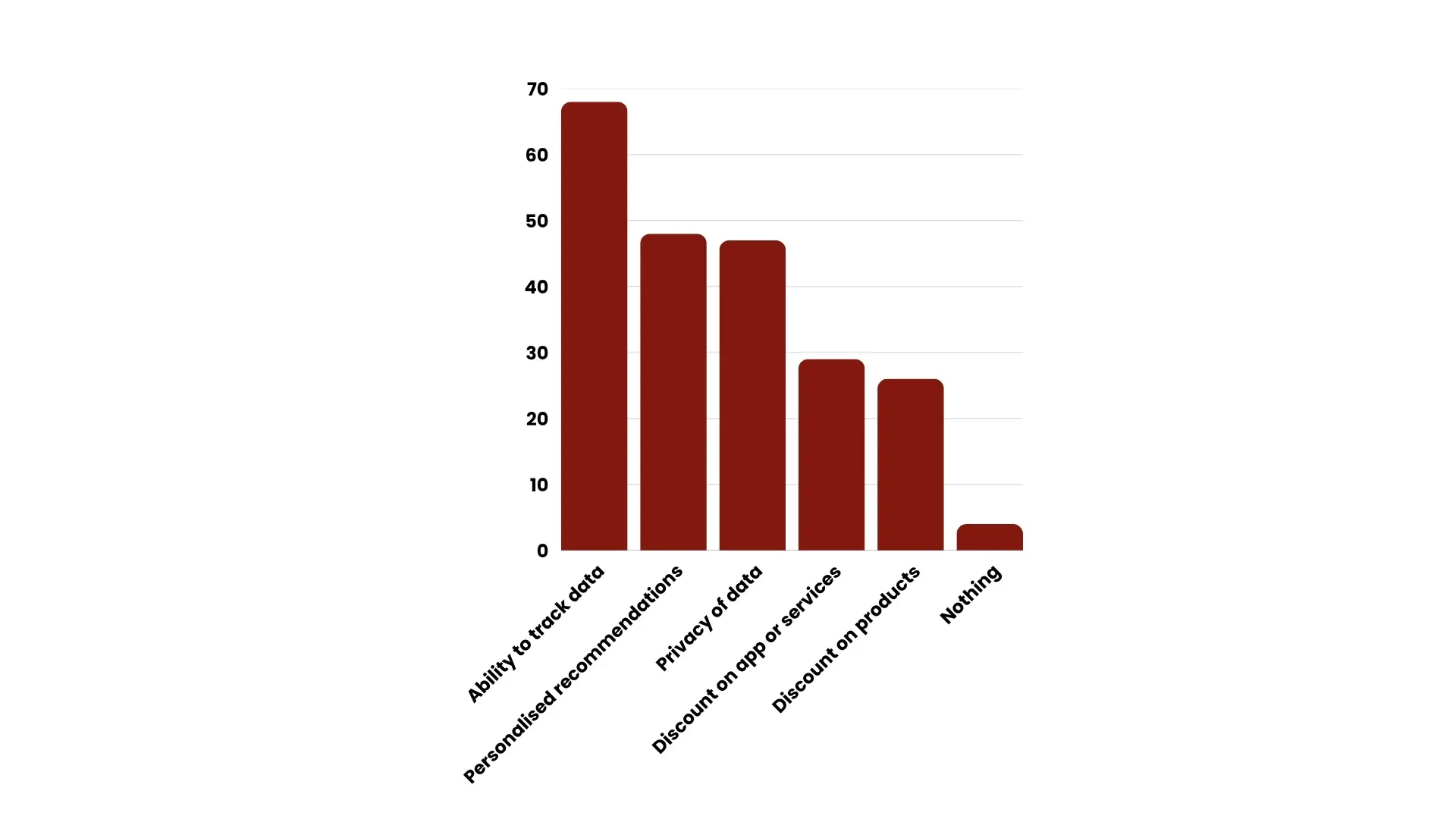
Source: Nlumn Consumer study (2026)
What does this mean, what has changed?
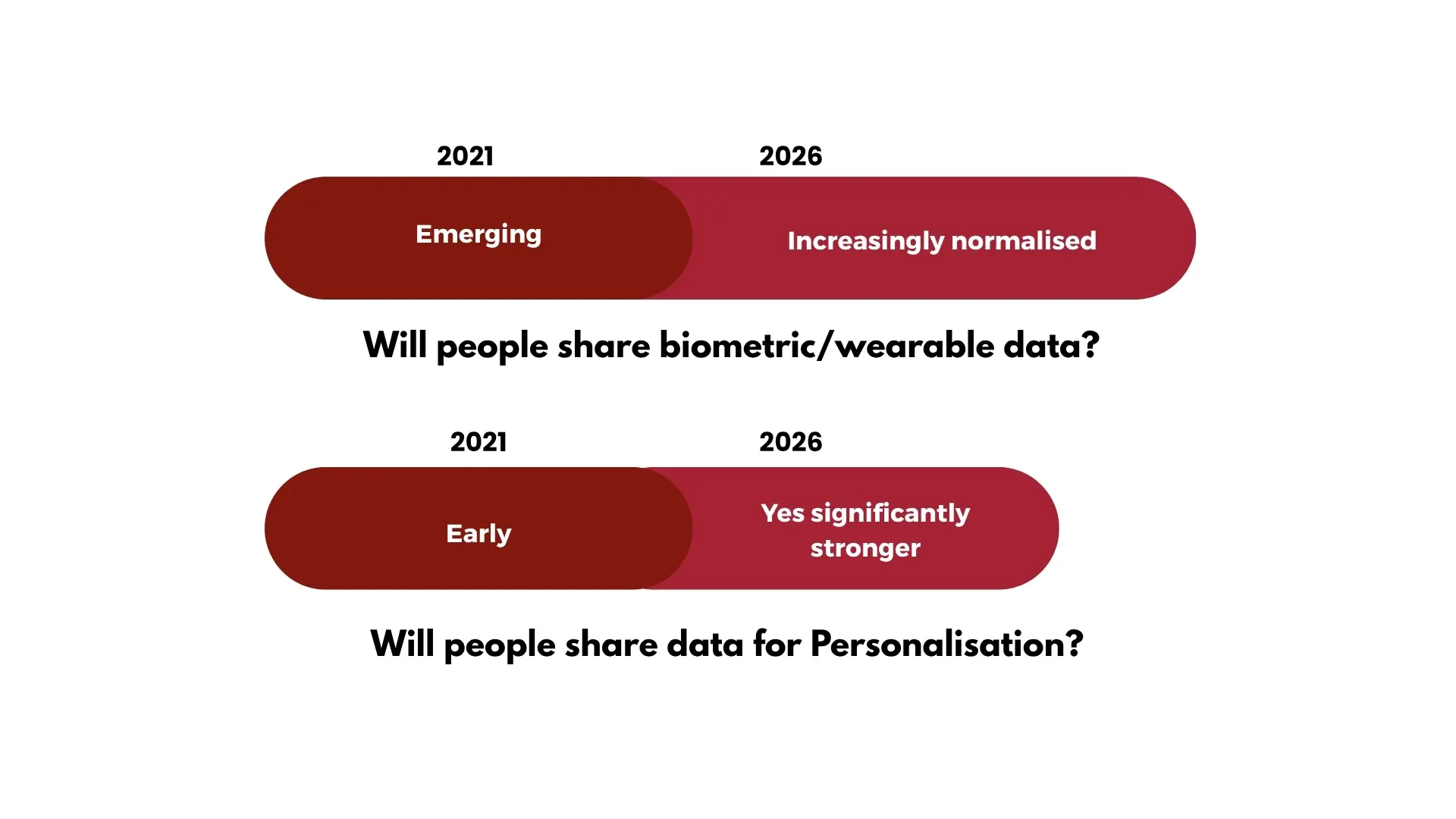
The above results indicate that over the last 5 years consumer sentiment has softened from a hard “no” of sharing data to a “maybe” in 2026. The market was in an adoption phase back then, but now consumers understand why they might need to share data. The overall trend is that consumers are more familiar with data-enabled health and personalisation, but not necessarily more trusting.
The biggest change is that the “value exchange” has moved from novelty such as DNA, blood and microbiome tests to a more mainstream expectation of personalised, science-backed, convenient support. Companies such as Arivale and Zoe led the way in making consumers more comfortable about sharing (biological) samples and therefore data in return for recommendations.
A few notable facts about data-sharing:
Health-data sharing becomes acceptable when the benefit is directly linked to personal health outcomes.
Nutrition appears to be a priority in order to optimize health or manage a chronic condition
The value should be transparent and immediate ie a consultation, a product
Consent should be explicit
The value should be proportionate ie if you can become a billionaire with my data, so should I!
How does Qina plan to level the playing field in GLP-1?
The most common challenge why individuals do not stick with a personalised plan is cost, lack of support and lack of personalisation. Privacy is not the top reason. Data from Nlumn already shows that 78% of GLP-1 users engage with personalised nutrition plans, but that does not mean that this is long-term. Overall personalised plans are used for less than 3 months. This is a problem as this means that the volume, quality and frequency type of data is highly variable and spotty.
At Qina, we believe that incentives and rewards coupled with human support can increase engagement and lead to higher satisfaction and engagement. Having a nutrition-behavior intelligence layer connects industry and consumers in a symbiotic relationship. This in turn can result in better data, long-term data and health impact. This is a win-win-win for all stakeholders along the value chain as quality data can be used to train algorithms and inform product development whilst building trust through transparency.
To learn more about how our nutrition intelligence layer can help Food, insurance, Consumer health, pharma and health-tech companies generate actionable insights and inform R & D teams, do get in touch.
References:
https://www.zs.com/future-of-health-report-2025
https://www.nzmp.com/global/en/news/consumer-trends-2025.html
Nlumn (2026)