The GLP-1 opportunity - time to shift from solutions to insights
Sep 02, 2026
Written by Mariette Abrahams PhD MBA
Obesity and overweight continue to be major concerns across the globe with 40%-60% currently overweight or obese in the US. According to a recent article published in the Lancet, 50% of the global adult population will be obese by 2050. The prevalence of Diabetes (currently 12%) is estimated to increase by 54% by 2015- 2023. Drastic changes are required to make a dent in these disturbing trends.
Despite many programs, a burgeoning weight loss/management market, and adjacent solutions, the trajectory kept trending upward, until the approval of GLP-1 RAs as a weight loss treatment.
GLP-1 agonists used to manage and treat Type 2 Diabetes but are now increasingly used to treat Obesity. The most commonly mentioned brand names are Ozempic, Wegovy, Mounjaro and Saxenda.
The drugs are injected weekly, or now also taken orally daily. GLP-1 adoption has been so fast that a few sources have cited that their uptake have been faster than the iPhone or Facebook.
While the headlines tout the significant benefits of these drugs, they also cause several debilitating side effects. Of particular concern is the dramatic reduction in appetite which leads to reduced total nutritional intake, nutritional deficiencies, loss of lean mass, gastrointestinal disturbances, and fatigue, to name a few.
Uptake of these drugs have sent ripple effects across multiple industries with knock-on effects on consumer food preferences, dietary, lifestyle choices and behavior.
GLP-1's have singularly and fundamentally changed the conversation around food, diet culture and health.
This white paper article dives into the impact of GLP-1 on the Food, Ingredient, digital health and Pharma industries and what it means for future innovation and solutions at the intersection of Food, Health, Tech and Society through the lens of Personalised nutrition.
Market overview
GLP-1 adoption continues to rise and with the approval of the oral drug, new consumers continue to start their health journeys. Increasing market competition means consumers are offered lower prices, discount vouchers, subscription plans resulting in GLP-1 users often switching simply based on price.
The global GLP-1 market is estimated to reach $200 Billion by 2030 according to JPMorgan.
While the US still leads the pack in terms of GLP-1 use with 1 in 3 US adults (16 million) having tried the drug (BCG, 2026), the UK is following swiftly with now around 8% of the adults population on the drug and Germany following in line too.
Despite the huge media coverage and adoption, around 64.8% of users stop within a year (JAMA, 2025). Around 1 in 12 are still on the drug beyond 3 years ( Prime therapeutics, 2025), around 42% restart within a year, and 10% of active users cycle on and off (BCG, 2026) pointing to a rebound effect, an issue that requires more attention.
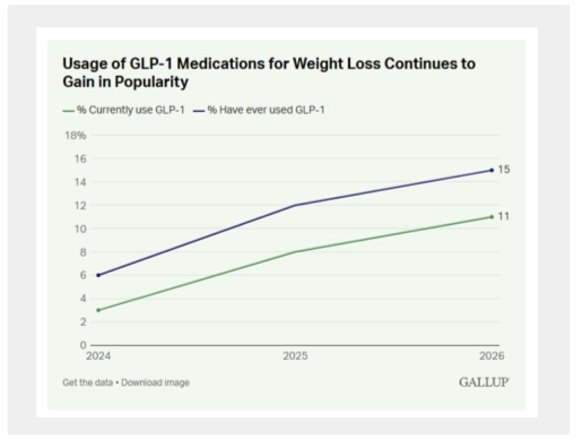
Overall, the signs point to a wave that is not even close to stopping according to the latest Gallup survey (2026)
Key drivers of GLP-1 use
Science and culture have moved on enough for us to understand that Obesity is not a lack of motivation nor willpower, but a complex mixture of factors that compound including genetics, lifestyle, biology, environment, social determinants. GLP-1 has given individuals a reason to change how weight issues are discussed.
There are multiple reasons why users start on a GLP-1 drug. A recent survey found that the 5 top reasons individuals will consider or start a GLP-1 is because they want to lose weight, eat better, improve their health(span), control appetite and cravings.
This means that the majority of users are looking to use the medication as a way to start their health journeys, rather than use it as a permanent solution.
Current user profile
In the US, women are twice as likely than men to start GLP-1 treatment, they tend to be older aged between 50-64 years and not Diabetic (KFF, 2025)
The UK is the largest market in Europe to date. Based on a recent publication by UCL, women are twice as likely than men to be on the treatment (4.2% vs 1.7%) and the highest use age bracket are peri-menopausal women aged between 45- 55 years (Jackson et al, 2026)
In Europe, the picture is less clear as most (80%) of prescriptions are acquired privately and therefore do not go via the traditional healthcare channels.
GLP-1 effects on health
The side effects of GLP-1 use are numerous, affecting up to 70% of individuals, which can be linked to the dosage, but not always.
The main effects are linked to:
- Digestive disturbances - impacting around 10-30% of GLP-1 users such as abdominal pain, nausea or diarrhea, constipation, vomiting, reduced desire to eat and reflux
- Loss of Muscle mass - 70-80% of adults experience >5% weight loss, however 20-30% may not achieve meaningful weight loss or metabolic improvements. This loss includes loss of lean mass between 25 –39% vs 10-30% using traditional methods (Prado et al 2024)
- Increased risk of dehydration have been reported (Kornelius 2024)
- Weight regain - After stopping the drug weight regain is a huge concern with 2/3 users regaining 1/3 of their weight within a year.
- Sarcopenia - It is not only the rapid loss of lean mass that is a concern, it is also a loss of muscle function and potential health risks. The rapid loss of muscle and function especially subgroups with co-morbidities such as older adults or those with metabolic dysfunction associated liver disease on GLP-1 are of great concern.
- Sensory changes: GLP-1 users experience sensory changes which range from food aversion, to enhanced sensitivity to sweet and fatty foods, but the evidence is scarce and inconsistent. In addition sensory changes are different from initiation of treatment to the maintenance phase.
On a positive note, there have been several reports of better sleep, a reduction in visceral and liver fat which all contribute to better metabolic health. Furthermore, GLP-1 users report a reduction in food noise which can now be measured using a validated survey.
What is Food noise?
Food noise is the constant barrage of thoughts and decisions around food that can impact daily functioning. It has been reported that obese individuals experience a high level of food noise which gradually and at times dramatically reduces while on GLP-1 drugs. A validated tool to measure food noise has recently been published.
Implications of GLP-1 use on nutrition and diet
GLP-1 RA’s reduce dietary intake by reducing appetite, slowing gastric empting and providing a sense of fullness. This happens because GLP-1 although produced naturally in the gut, acts on the appetite (and reward) center in the brain. The resulting effect is a drastic reduction in calorie intake (16-39%). One study reported a reduction in intake of around 1200kcal/day. Such a drastic reduction can lead individuals struggling to meet their daily micro and macro nutrient needs and increasing the risk of nutrient inadequacy or even malnutrition. Consumers on GLP-1 demonstrate marked reduction in food intake month 1-3 (initiation and titration stage) and then 4-12 (maintenance to discontinuation stage)
To date, the number of studies of actual intake of GLP-1 users is very limited. In fact, a recent systematic review and metaanalysis found that in total only around 12 studies covered nutritional intake, all with different measurement approaches and only 3 included nutrition expert involvement (Spreckley et al, 2026). A sad state of science when there will be an estimated 30 - 35 million users worldwide in just a few years.
Protein intake
The general protein requirements set for individuals on a calorie reduced plan can be anywhere from 1.2g/kg-1.5g/kg.
Based on the recent paper by Johnson et al , the average daily intake was around 77g/day. This indicates that individuals on treatment have a protein gap.
Micronutrient intake
The reduced intake increases the risk of micronutrient deficiency of key concern is iron, Calcium, Magnesium, Vitamin D, B12 (Almandoz et al 2024)
Fiber intake
Based on the current research, the average intake of GLP-1 users was 15g/d, half of the generally set daily target.
Fluid intake
GLP-1 use is accompanied by a reduction of fluid intake as a result of the reduction of appetite and “forgetting” to drink as reported by users. This lack of fluid intake further exacerbates transit time and early satiety can lead to increased risk of dehydration. Dehydration also contributes to reduced cognitive and physical performance.
In short, nutrition plays an important role in the success of the GLP-1 treatment, yet the evidence is scarce on what exactly that should look like. Nutritional intake can change drastically over the treatment period with initiation coupled with the most side effects and therefore the highest risk on nutritional inadequacy. Yet discontinuing is associated with weight regain, meaning that unless nutritional adequacy is coupled with behaviour change, long term success is uncertain.
Considering that less than 8% of GLP-1 users are referred for expert nutrition care, we can safely say that right now, we are certainly failing GLP-1 users.
Enjoyment of food
Food and diet is a core component of our identity. Food can be fuel, comfort, nostalgic, bring people together and so many other things. However, GLP-1 treatment reduces appetite to such a extent that individuals do not feel hungry, forget to eat, and based on online chatter are dangerously content with not experiencing hunger. These are nutritional red flags and require expert oversight.
Consumer attitudes & behavior
The impact of GLP-1 on dietary and food shopping behaviors has been covered in numerous reports, we will not regurgitate these, but want to highlight the key learnings:
Food behaviors and preferences
Consumers who are not on GLP-1 but are looking to reduce weight are looking to reduce sugar intake, increase fruit & vegetable consumption as well as increase protein, dry beans (Dan Frommer), and clean label. They adopt intermittent fasting or time-restricted eating patterns. According to a recent survey by the Boston Consulting Group (August 2026), GLP-1 users are twice as likely to spend money on functional products than on premium products.
Food shopping behavior data shows that consumers reduce alcohol, sugar sweetened beverages, confectionary, take-away meals and salt. Whilst consumption on fish, nut, legumes, fruit & vegetables, dairy has increased.
Consumers reduce food & beverage spending but still outspend non-users which means they are buying less but more quality products as well as other products that support them on their health Journey.
While we have a pretty idea of what GLP-1 users shop and scan in-store, we actually have very little insight into what they actually consume.
The BCG report also highlighted that the money saved from spend on food because of a reduced appetite is redirected to supplements (such as collagen) as an example.(BCG, 2026)
Lifestyle
GLP-1 users are more engaged and proactive about their health, we see this as users have a significantly higher spend on digital health solutions especially in the first year.
They report higher levels of travel and increased spending on appearance and personal style (PwC, 2026)
Around 70% of GLP-1 users already create their own personalised nutrition solution combinations(Nlumn)
Less than 6% of GLP-1 users plan on being on the treatment long-term.
Attitudes
GLP-1 users see the medication as a spring board to a health journey, many times after many attempts. Re-starting or cycling is becoming common and nutrition and lifestyle are certainly becoming more intentional and targeted. Treatment has brought about a sense of freedom (from food noise) and control (over the food decisions). Medication is use is becoming normalized in the context of health, a totally new territory.
The medication provides an opportunity to plan, strategize and learn clearly in the absence of food noise. This has given users the headspace to re-evaluate their eating behaviors, habits and routines. And because in many cases the treatment works fast, the visual feedback reinforces the conversational shift from weight loss to health and healthspan.
As the majority of GLP-1 users start treatment to improve their health, users identify more with the Healthspan/healthy aging community than the Chronic disease community. This impacts how brands communicate with users going forward.
How the food & Ingredient industry has responded
GLP-1s have changed the conversation around food and health in a number of ways. Firstly, there is an increase and focus on high-protein consumption vs diet plans. Secondly, GLP-1 adoption has coincided with the mass movement towards food transparency, avoidance of ultraprocessed food and Food as Medicine.
This has meant industry has develop new solutions, re-formulated others and re-positioned many to lean into the GLP-1 trend.
This shift has meant that industry solutions targeting GLP-1 users can range from disease prevention to medical foods
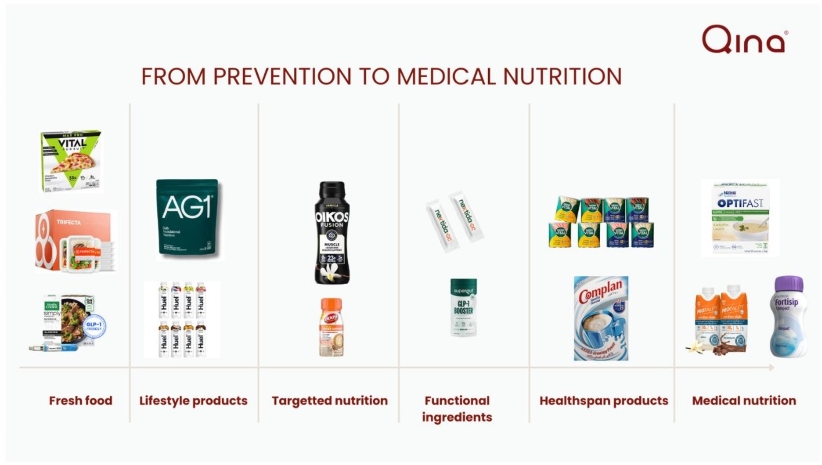
Solutions can generally classified as:
- GLP-1 boosters: products that enhance the production of natural GLP-1
- Companion products- products that can be used while on treatment eg Boost shot
- Lifestyle/convenience products: Nutritious food users can consume on the go or as a snack eg Huel, Danone Oikos fusion
- Food supplements: Products that have a single ingredient or are nutritionally incomplete eg Complan, protein powders, fiber supplements, bioactive peptide
Below we provide a few industry examples:
GLP-1 cluster products
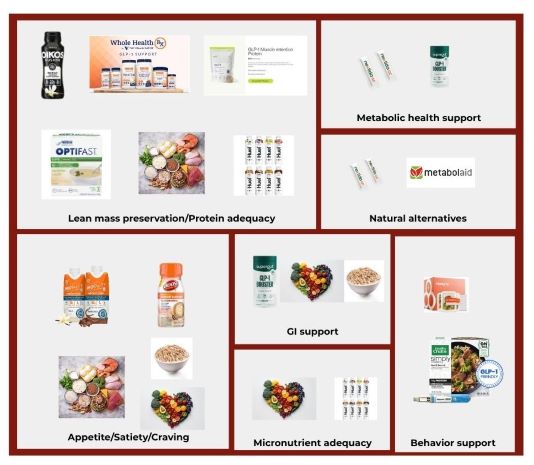
In terms of consumer benefit or focus, products can be viewed in clusters as illustrated below. This spans from food, ingredients, to supplements, retail and consumer health and medical food products. The clusters include lean mass preservation, natural alternatives, appetite/satiety, GI support, micronutrient adequacy and behavior support and metabolic support. These modules that can be combined based on the side effects experienced or desired health goals and of course they can also be present in more than one cluster.
It comes as no surprise that a lot of industry focus and consumer understanding is around the area of lean mass preservation and protein adequacy, yet the importance of the other clusters should not be underestimated. Areas such as bone health, mood, active nutrition considering the increased uptake of physical activity of GLP-1 users especially during the first year, are sorely underrepresented and underdeveloped.
Remember, we have over 16 million GLP-1 users, but only 12 dietary studies.
How has the tech-enabled Personalised nutrition industry responded?
GLP-1 users are actively engaged in technology, probably because they are motivated to change and a vested interest in tracking how their health and shape is changing over time. The digital health and device industries have jumped on he GLP-1 opportunity witnessed by the eyewatering numbers of new companies, partnerships and acquisitions on a weekly basis.
At Qina we keep our finger on the pulse of new innovation, research, investments and partnerships in the area of Personalized health and nutrition, you can learn more here
Meal planning and recipes
GLP-1 users need to manage food choices in midst of small appetites, fatigue, and side effects. AI agents can take on the entire job from selecting ingredients, to products adding items to shopping carts, recipes and meal planning based on how a user is feeling.
For example Spoonguru has developed an AI Agent that can support a user with recommendations and ideas from their local supermarket.
Telehealth
GLP-1 users are not patients, this means that traditional platforms may not deliver on customer satisfaction as the focus is more on managing symptoms and healthspan through behavior change. Telehealth platform provide tracking features as well as expert support enabled or supported by AI.
For example Noom who use a Cognitive behavior approach (CBT), have just launched a free tier for GLP-1 users.
Nourish has pivoted from being a telehealth company to a complete metabolic health platform also offering basic biomarker test. Nourish has partnered with Wisp to provide counselling and support to women on GLP-1 drugs. They have received a record Series C investment of $100million earlier this year.
Tracking & Monitoring
The number of apps offering tracking and monitoring features for GLP-1 users has exploded. The function is to allow users to see and track how their symptoms respond over time as dosages change.
For example:
Myfitnesspal has created a new solution specifically for GLP-1 users combining food, symptom, medication and physical activity logging.
Metabolic health
It comes as no surpise that Metabolic health is an important focus area as GLP-1 has been traditionally used in Diabetes care. However, new digital solutions are aimed at tracking or predicting individual glycemic response to foods and supporting behavior change.
For example:
Signos (the first CGM-enabled weight loss solution that has been approved by the FDA)
January AI, Zoe and Hello Inside all provide insights and recommendations on which food to consumer to lower glycemic response.
But it is not only startups making waves in metabolic health. The leaders in Diabetes care are adjusting their models and have made strategic moves to play within the consumer lifestyle/wellness market.
For example:
Abbott partnered with Google on AI glucose coaching
Dexcom acquired Nutrisense
Devices
From body scans to digital scales, the GLP-1 trend is opening up new avenues for device companies to sell their devices as a data source.
For example:
Withings a French device company has launched the latest version of their digital scales that can measure body composition but also provide a metabolic age
Oura the sleep wearable acquired Veri a CGM-enabled digital health startup, combining sleep and blood glucose data with an AI coach
Supplements
As described before, nutritional deficiencies are a real risk when starting GLP-1 treatment. GLP-1 users actively seek new formats that are effective, convenient, and easy to swallow and brands are stepping up.
For example:
Nourished- a 3D printing UK based startup has developed a new product aimed at supporting individuals on their weight management journey.
Food tech
Meal-kits or meal delivery have traditionally been associated with a “Food as medicine” approach, but they are making their way into GLP-1 journeys, being specifically portion controlled, designed with sensory changes in mind and high in protein.
For example:
Morrison’s, Marks & Spencers, Ocado, Co-op, and Asda have all launched GLP-1 ready meals early this year.
Gyms & Fitness
Gyms, Fitness centers and even spa’s are offering GLP-1 focused services that aim to support users on their journey. Within these centers personal training and assessments are coupled with prescriptions for GLP-1 by clinicians as well as access to nutrition support via experts.
For example
European E-Gym has launched new services and gym machines that can conduct physical assessments and recommend which exercises and routines to follow.
Pharma
Even pharma is not immune to the demand of GLP-1 users who are looking to pharma companies to provide the support they need to stay on the treatment to reach their health goals.
For example:
Novo Nordisk has created a library of digital tools to signpost pharmacies to what is available on the market based on their customers’ needs, preferences and profiles.
What this all means
A new industry is taking shape
We are living in exceptional times. From wars, to famine and rapid technological advancements, there is never a quiet moment. Never have we witnessed such a simultaneous convergence of trends all moving in the same direction pointing towards health.
The lines between health, wellness, food and pharma industries are becoming increasingly blurred, and a new industry is taking shape. This shift is driven by consumers and enabled by technology (social media and AI).
Higher expectations -While consumers want to use GLP-1s in the short term to reach their health goals, they are looking to the food, ingredient and pharma industry to provide the solutions to sustain the weight loss results in the long term and increase their healthspan. This means a fundamental shift from “food as convenience” to food as a “gateway to health”.
Organisational shift- For industry, this means moving from a broad, marketing-led approach to one that uses real human data, is evidence-led, preventive, and more personalized, targeting groups and segments. GLP-1 users do not see themselves as patients but rather as individuals seeking to increase and improve their healthspan. It requires reformulation, package considerations, repositioning, real-time feedback and data, but there are a few hurdles to overcome first.
Willingess to pay- While access to the drug in different formats is getting easier across the globe with increasing competition, the same is not true for the nutrition and lifestyle support that should be mandatory alongside it, and today nobody seems to be willing to pay for the long term support that is so desperately needed for the desired health outcomes.
Poor insight & understanding- We have absolutely no idea what works best for whom, why and at what stage, in terms of nutrition and behavior change techniques to support GLP-1 users best. So adding more protein or fiber to products solves part of the problem, not the long term behavior change we need to see.
In addition, current high users of GLP-1RA’s are perimenopausal women who have co-morbidities, busy lives and high levels of stress, yet industry treats this group as users or non-users. What this segment specifically need is expert medical nutrition and behavior support that is empathetic, long-term and personalised.
Cross-industry ecosystems - We are also witnessing the creation of cross-industry weight management ecosystems that are creating the infrastructure to make it easier for GLP-1 users to move across industries swiftly, while also collecting valuable data.
Poor data, poor decisions -Despite the explosion of digital solutions, adherence is poor as consumers still want human support for trust, transparency and accountability. These results are consistent globally. Rapid AI adoption is not solving the retention problem in digital health. However, cost remains a huge barrier for individuals to access support. And since individuals need to pay out of pocket for most solutions, the adherence has been beyond dire, with most solution having retention of less than 3 months.
From a treatment lens, studies have shown that individuals with expert support stay on average 11 months.
In short, poor retention leads to limited and low quality data, followed by poor insights and costly decisions.
Companies need better insight into the daily choices and behaviors of users in the real-world context in order to relevant and personalised provide support
The problems that need to be solved:
- Access to Longitudinal data, quality data
- Targeted solutions for specific groups
- A shift away from Mass to groups or segments
- More context from real-world data
- New business models to solve the adherence and efficacy problem.
Having better and more detailed insights into consumers is commonly said but rarely done. And as lines between industries keep blurring, customers’ daily health journeys flow effortlessly across industries, this is especially true for AI native younger generation.
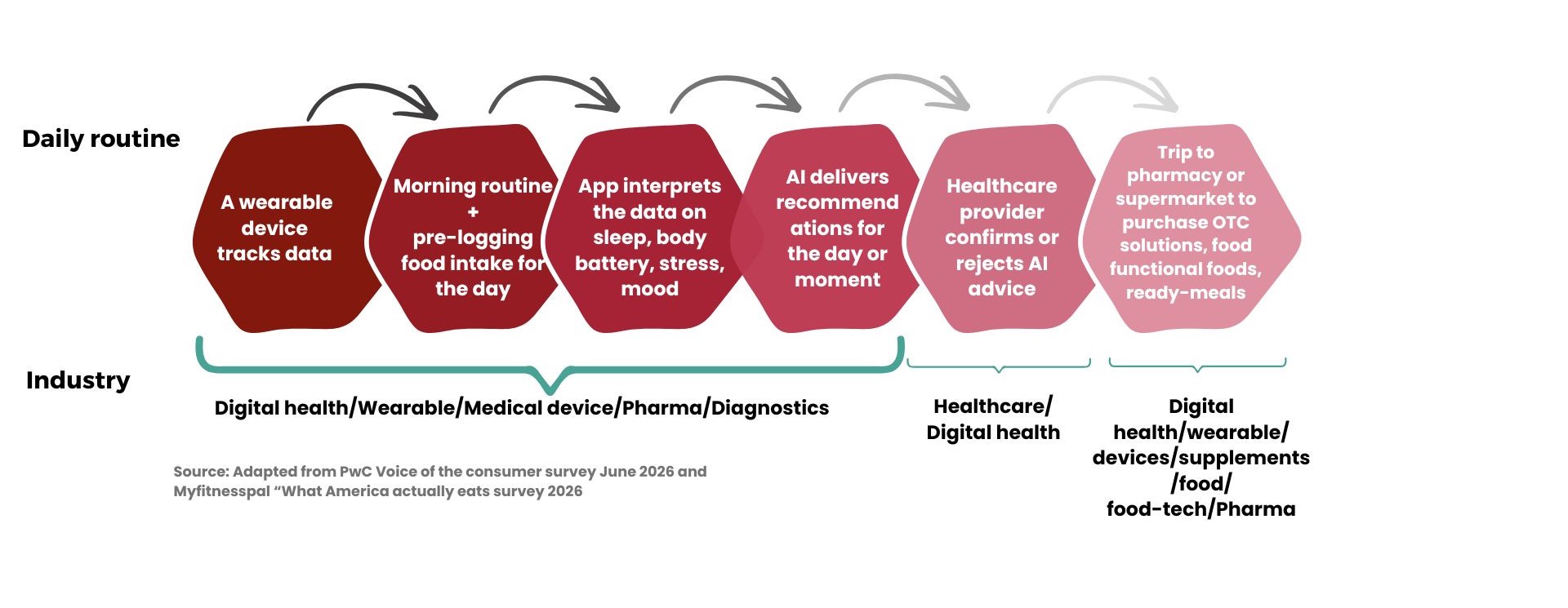
For example, a GLP-1 user could use a wearable to track their sleep, physical activity and heart rate variability. Once they get up in the morning they could start with a protein shake with added probiotics and fiber. They could use the Myfitnesspal app to pre-log the food they are going to consume to save time and cognitive load. They can then look at their dashboard on their phone or app to view their tracked data.
AI can then provide a set goal or goals for the day (based on their personal diary) with personalised recommendations on how to achieve them. These recommendation are pre-checked by a health practitioner or sent to the practitioner for validation.
The recommendations can include the consumption of a specific food, beverage, meal or supplement at a specific time or occasion.
This journey is not hypothetical, it is already happening in the market with the DIY approach GLP-1 users are already taken.
However, this journey is currently fragmented, incomplete, without measurable outcomes and based on poor data. The focus should not be on treatment adherence only, it should also be about health outcomes. The next generation of solutions should have a clear play, but where are the opportunities?
Where are the Opportunities For Food companies
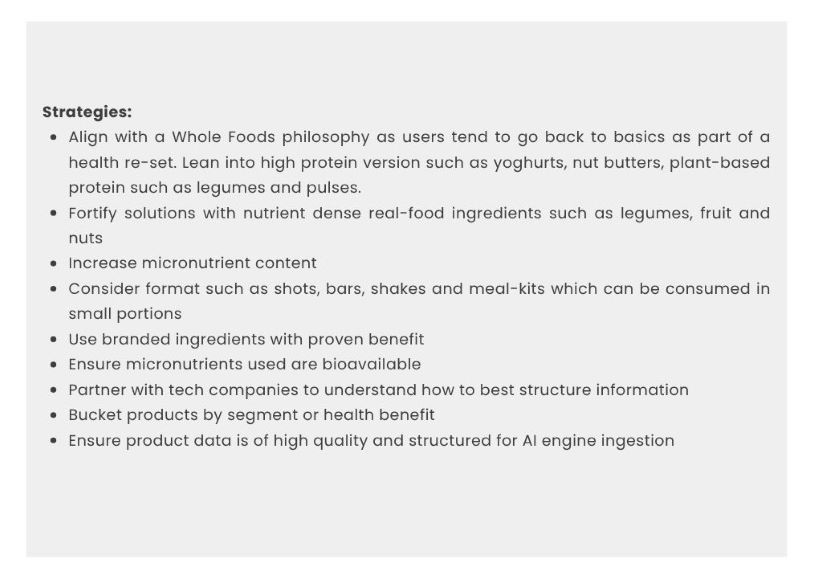
As consumer interest in food and health evolve, brands need to go beyond initial uptake to demonstrating how their solution contributes to measurable health outcomes. There are several ways to position a solution which can be broken down into:
Nutrient density: For example by the nutritional density, nutritional composition as it aligns with the nutritional requirements of individuals on GLP-1 treatment. This can include portion size high protein, high fiber, low fat etc. Also ensuring that micronutrients are considered, especially Vitamin D, B12 and iron.
Health goals: The majority of users have a goal to lose weight and improve their overall health rather than improving their metabolic control per se. Brands need to create create segments based on the health goals or benefits users are looking for. This is especially true for foods/ingredients with functional benefit.
Timing: Most users experience side effects within the first 3 months, this means that a solution can be positioned based on where an individual is on their treatment journey for example at at the start (considering), month 0-3, month 4-6, month 6- 12, post treatment/weaning off.
Side effects: Solutions can be based on which side effects they are targeting for example nausea, constipation, abdominal pain or muscle loss.
Preferences: A solution can be positioned whether it is a complete solution or whether it is a companion product
Satiety: Different fibers have different satiating effects, invest in resources before reformulating
For Ingredient companies
Repositioning brands from solution provider to insights platform
The market has shifted and Ingredients companies can no longer hold onto the same business model inside a increasingly competitive market that adopt AI recommendation engines at a rapid pace. Instead of selling individual ingredients to formulators and manufacturers, ingredients companies have an opportunity evolve into insight platforms or partners that can provide detailed insight into how their ingredients work for different segments based on real-world data.
As outlined before, Ingredient companies will need to provide ingredients + behavior support in order to stay relevant in a fast changing health-forward world to ensure their ingredients are used long term, demonstrate health outcomes and are still effective in different formats and formulations. Consumers expect whatever they take, to be medical grade.
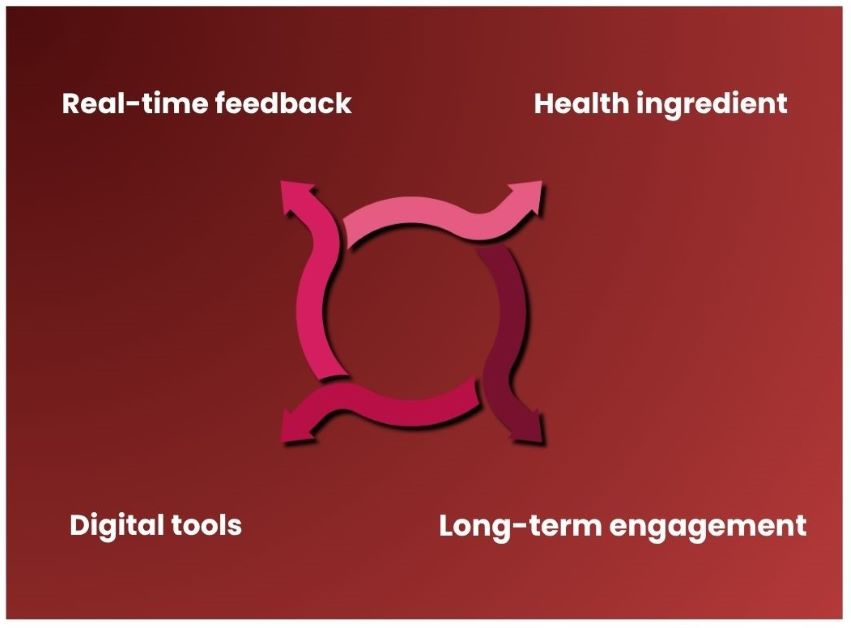
This can be achieved by combining real-time consumer data for feedback; expert behavior support for adherence and engagement and digital tools such as AI for insights, analytics and recommendations.
These insights in turn help finished product brands with targeted communication; real-world evidence (not in a controlled environment), as well as structured data that can be ingested by AI tools.
This shift opens up a potential new revenue stream,
but can most importantly help to provide deeper insight into how ingredients behave for different phenotypes in an area where there is limited evidence.
Sample questions that can be answered
- Does my ingredient work for those on a maintenance dose?
- Does a higher dose of my ingredient work better for older individuals?
- Does my ingredient work for individuals who experience X+X side effects during the titration phase?
- Which ingredient combo’s work best?
- Which ingredient and actionable deliverables work best?
- What time is the best time to take the ingredient based on different phenotypes?
The same approach applies to pharma and consumer health brands who can can provide more personalised and targeted feedback to both end users and customers based on evidence.
In short, in order to stay relevant what is needed is the infrastructure to capture longitudinal data where both industry and end-users reap the benefit.
We describe what that looks like next.
The solution
Qina has been at the forefront operating in the Personalized nutrition industry since 2019. Over this period, we have collected, curated, analyzed and visualized data across the industry as part of our consulting services to multinationals, startups, organizations and academia. All our knowledge, experience, insights and proprietary data have been compounding to a point where we have 4 distinct layers to help executives in Food, Ingredients, Health-tech and pharma make better decisions.
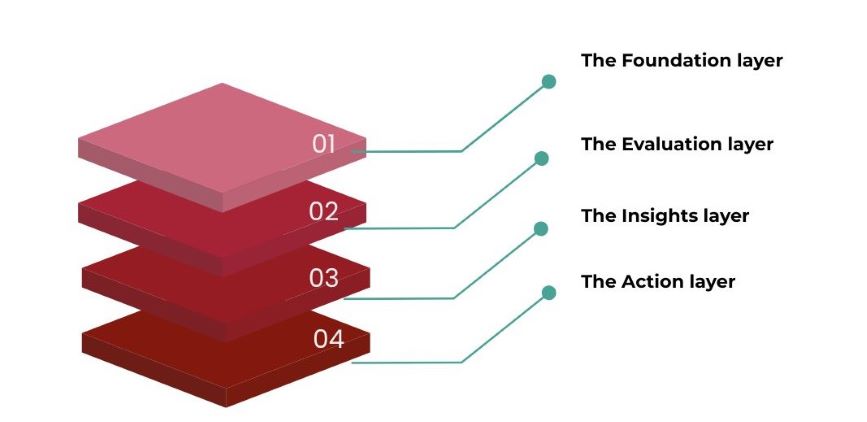
01- The Foundation layer
This layer is about understanding who is in the market offering services across GLP-1 and metabolic health. It is the first comprehensive database of the competitive landscape across nutrition, health, and tech. With over 1000 listings, covering metabolites, AI agents, meal kits and microbiome apps, the database provides a bird’s-eye view of the current landscape with advanced filters and rich descriptions through the lens of health experts, not investors.
02- The Evaluation layer
Combines our domain expertise with proprietary scoring system to score each company listing to help executives save time and online searches to evaluate suitability for partnership based on shared values or strategic focus.
Our internal tools identify white spaces and we deliver market analysis and evaluate recent research through our content to help executives understand the market and stay abreast on developments.
03- The Insights layer
Combines real-time consumer data, real-world evidence, digital tools and behavior support to generate longitudinal and contextual data to help companies find product & user behavior fit and demonstrate health outcomes.
This layer provides the nutrition-behavior intelligence layer that delivers insight into what works best for whom under which circumstances to help GLP-1 users reach their health outcomes. Executives can use these insights to identify new segments, new product needs, and understand how to integrate their solutions into the daily routines of busy end-users.
04- The Action layer
As an AI-enhanced strategic advisory consultancy, Qina combines insights from real-time data, market data and expert intelligence into actionable plans, roadmaps and internal communications.
Deliverables of the action layer include keynotes, presentations, workshops and quartely updates.
Quality data unlocks better insights
It is clear that in current business models incentives are misaligned to support users in the long term with high cost a major barrier to product adoption beyond the drug itself. At Qina, we believe that through a multi-sided ecosystem, all stakeholders who contribute to it, can reap the rewards.
In practice, this looks like an ecosystem where GLP-1 users share their data in return for receiving personalised expert support.
Companies can access this consented, longitudinal data through different tiers while at the same time the user also benefits.
If you want to know how the intelligence layer can add value to your existing brands, do book a call to discuss further.
Conclusion and Future outlook
We are at the beginning of a new era where tech, health, pharma and food intersect.
GLP-1's are changing the conversation and shifting entire industries. This is not a trend, it is revolution that can no longer be ignored.
At a time when GLP-1 adoption is high, behavior support is low and research is scant, a new approach is needed to realise the potential of GLP-1 for societal health impact.
This requires a new way of innovating, formulating and collaborating.
Food is health, and consumers are increasingly demanding nutrient dense, affordable and effective solutions that they can use in the long term.
To achieve this, companies need to change gears, put their foot on the pedal and move at the speed of changing consumer needs. This means going from behavioral personas and social media hashtags, to physiological proof that a product would actually work for them, why and at which stage.
This can only be achieved by combining real-time data, digital tools and long-term behaviour support in a way that also benefits the end-user. We believe this is possible.
Winning companies will be those that understand this shift and leverage data and insights to create new solutions and identify new segments.
The consumers are ready and waiting, the question is, are you?
About Qina
Qina is a strategic nutrition innovation consultancy and intelligence platform that combines data, domain expertise and digital tools to support executives in the Food, Ingredients, Pharma and consumer health industries to innovate. Qina has worked with multinationals, startups and organizations providing innovation, research and strategic services. Learn more about our innovation services here
References
Global, regional, and national prevalence of adult overweight and obesity, 1990–2021, with forecasts to 2050: a forecasting study for the Global Burden of Disease Study 2021. Ng, Marie et al. The Lancet, Volume 405, Issue 10481, 813 - 838
Morgan Stanley report https://www.morganstanley.com/ideas/obesity-drugs-market-expanded-opportunity
Muscle matters: the effects of medically induced weight loss on skeletal muscle
Prado, Carla M et al.The Lancet Diabetes & Endocrinology, Volume 12, Issue 11, 785 – 787
Kumbhare SV, Pedroso I, Joshi B, Muthukumar KM, Saravanan SK, Irudayanathan C, Kochhar GS, Dulai PS, Sinha R, Almonacid DE. Longitudinal gut microbial signals are associated with weight loss: insights from a digital therapeutics program. Front Nutr. 2024 Jul 8;11:1363079. doi: 10.3389/fnut.2024.1363079. PMID: 39040930; PMCID: PMC11262244.
https://finance.yahoo.com/news/digbi-health-present-groundbreaking-study-150000513.html?guce_referrer=aHR0cHM6Ly93d3cuZ29vZ2xlLmNvbS8&guce_referrer_sig=AQAAAB4PDyiIatttNIbgnYGb5IGdED4mK88aEWFcIUqK8zIcdvLs5tqgCdz7NuFoWgc8x53qBP8B2o6mB9oKmsjwGPpnr7W2NglnjGD0Ue6b0TO3XRJ0b7_sW6vvUokBWkXN8FMBZMX1xvPkDW9K1UOcezG5CFrofQYxRPhucHVLE58G&guccounter=2
Incretin-Based Therapies and Lifestyle Interventions: The Evolving Role of Registered Dietitian Nutritionists in Obesity Care
Gigliotti, Linda et al.Journal of the Academy of Nutrition and Dietetics, Volume 125, Issue 3, 408 - 421
https://tech.eu/2025/01/10/verdiva-bio-launches-with-411m-series-a-raise-for/
Hinte, L.C., Castellano-Castillo, D., Ghosh, A. et al. Adipose tissue retains an epigenetic memory of obesity after weight loss. Nature 636, 457–465 (2024). https://doi.org/10.1038/s41586-024-08165-7
Kornelius, E., Huang, JY., Lo, SC. et al. The risk of depression, anxiety, and suicidal behavior in patients with obesity on glucagon like peptide-1 receptor agonist therapy. Sci Rep 14, 24433 (2024). https://doi.org/10.1038/s41598-024-75965-2
https://www.theguardian.com/business/2026/jan/17/uk-supermarkets-go-all-out-for-jab-uary-with-food-for-those-on-weight-loss-drugs
Nlumn Personalised nutrition consumer survey 2026, https://www.nlumn.com/articles/inside-the-diy-personalized-nutrition-ecosystem-what-68-of-consumers-are-building-on-their-own
Prime Therapeutics' leading research shows only 1 in 12 remain on a GLP-1 drug for obesity at three years. Prime Therapeutics. June 25, 2025. https://www.prnewswire.com/news-releases/prime-therapeutics-leading-research-shows-only-1-in-12-remain-on-a-glp-1-drug-for-obesity-at-three-years-302490407.html
The Unexpected Ways GLP-1s Are Transforming Consumer Behavior-https://www.bcg.com/publications/2026/glp-1-consumer-behavior-shift
M. Spreckley, C. F. Ruggiero, and A. Brown, “ Nutrition Strategies for Next-Generation Incretin Therapies: A Systematic Scoping Review of the Current Evidence,” Obesity Reviews 27, no. 6 (2026): e70079, https://doi.org/10.1111/obr.70079.
Scheen AJ. GLP-1-derived therapies and sarcopenia: plea for a specific focus on at risk special populations. Diabetes Metab. 2026 Jan;52(1):101708. doi: 10.1016/j.diabet.2025.101708. Epub 2025 Oct 14. PMID: 41101588.
Jackson, S.E., Brown, J., Llewellyn, C. et al. Prevalence of use and interest in using glucagon-like peptide-1 receptor agonists for weight loss: a population study in Great Britain. BMC Med 24, 1 (2026). https://doi.org/10.1186/s12916-025-04528-7