Can Smart Cameras lead to Smarter Diets?
Mar 12, 2026
As AI becomes embedded in everyday tools, expectations are shifting towards one-click experiences. Snapping an image to log a meal is increasingly seen as a must-have rather than a nice-to-have. But how do we ensure responsible and accurate use of this information to improve health outcomes for diverse populations?
What is Image Logging?
Image logging is redefining how we track what people eat, turning photos from smartphones, smartwatches or smart glasses into powerful nutrition data. Instead of typing every meal into an app, users simply snap a picture and AI does the rest.
For people living with obesity, diabetes, cardiovascular disease and other chronic conditions, understanding and improving dietary habits is a core part of care. At the same time, our lives have shifted to mobile-first: we bank, shop and communicate on our phones. Unsurprisingly, where traditional manual logging has well-known limitations including recall bias and time burden, dietary tracking through mobile apps has become more common. Advances in computer vision and AI have paved the way for more intuitive, lower-friction approaches such as image logging.
“While chronic conditions like obesity and diabetes climb and digital health goes mobile-first, the question isn’t if food tracking will go visual - it’s how quickly.”
By allowing users to log meals with a quick photo, these systems aim to:
- Reduce time and effort
- Increase accuracy and objectivity
- Provide real-time feedback
- Remove barriers to adherence over the long term
The broader trend of using photos for food tracking and analysis is accelerating and is likely to become a standard feature in next-generation personalised nutrition and digital health solutions.
What Is the Technology Behind Image Logging?
At the heart of image logging are smartphone or wearable cameras combined with deep learning algorithms. Researchers have developed image-based food recognition systems that can automatically analyse a plate of food.
Image logging moves through three main stages:
1. Segmentation – Distinguish individual food items (e.g., chicken, rice, salad).
2. Classification – Match each item to a category in the food database.
3. Estimation – Calculate calories, volume, and nutrient profiles. (1)
From a technical perspective, these systems typically combine:
User-facing hardware: the camera embedded in a mobile phone, smartwatch or other wearable
Computer vision methods: algorithms that detect, segment and interpret visual information from food images
Food datasets: large collections of labelled food images linked to nutrient databases
Key technologies include Convolutional Neural Networks (CNNs), transfer learning, and segmentation models fine-tuned for real-world food images. The accuracy of segmentation techniques also relies on deep learning methods and transfer learning, where models are trained on very large, general image datasets that are fine-tuned with food-specific datasets to improve recognition performance and robustness across settings.
Depending on the solution, this processing can happen on-device, in the cloud, or via a hybrid approach. Some systems also allow the user to correct or confirm items to improve accuracy over time.
Ultimately, the quality of the underlying models and data strongly influence the accuracy and value of the output.
The Use of Image Logging in Personalised Nutrition and Health Apps
Image-based food logging is becoming increasingly popular. Key use cases include:
Personalised nutrition recommendations
As image logs accumulate, apps learn everyone’s individual eating patterns. They can highlight nutrient gaps, spot excesses (like sugar or sodium) and generate tailored suggestions, to nudge users toward more balanced, data-driven choices.
Health monitoring
For people managing diabetes, obesity or cardiovascular conditions, image logs offer objective, time-stamped dietary records. Clinicans gain a clearer view of actual eating habits, enabling:
- More informed consultations
- Stronger links between diet, biomarkers, and symptoms
- Better remote monitoring and dietary adherence
Research and innovation
Researchers use image recognition to improve dietary assessment and study behaviours in daily life. Compared with recall-based methods, image logs reduce bias and capture context including what was eaten, when, and in what setting.
How Accurate Are Image-Based Food Recognition Systems?
Modern image-based food recognition tools, powered by deep learning and CNNs, have achieved major leaps in precision - classification accuracy on benchmark datasets, such as food-101 has risen from 55% to over 90% (2). They often match or even surpass human reviewers in identifying unfamiliar foods.
However, accuracy still varies across cuisines, mixed dishes and lighting conditions. Ongoing tuning of models and datasets is essential to make results both trustworthy and inclusive.

To rely on image-based food recognition tools, they must be trained from large datasets with diverse cuisines and under different conditions.
Gaps in Research and Key Challenges
Despite rapid progress, there are important gaps and challenges that solution providers, clinicians and researchers need to consider.
Dataset limitations and diversity
- Many food image datasets lack diversity in terms of cuisines, preparation styles and cultural eating patterns.
- Datasets may be skewed towards Western diets, under-representing foods common in other regions.
- There is limited tailoring of datasets to people with specific metabolic conditions, such as diabetes, even though these populations stand to benefit most from accurate dietary monitoring (3).
Context and personalisation
Current systems often focus on what is on the plate, but not why it is there. Integrating contextual data - such as wellness goals, activity levels, metabolic responses, medication regimens or cultural preferences, emotional state and even with whom a meal is shared remains an ongoing challenge. Without this context, it is difficult to move from generic nutrition feedback to truly personalised recommendations.
Privacy, ethics and data governance
Image logging requires access to cameras on mobile phones and wearables and often captures more than just food (e.g., people, homes, workplaces). There are legitimate concerns about how images and derived data are stored, processed and shared especially considering the recent news about Meta's glasses and image coders. Ensuring compliance with data protection regulations and applying privacy-by-design principles is essential, especially in healthcare settings. To date the adoption of smart glasses is quite low, which means it is a great opportunity to put the right guardrails in place.
Technical limitations and user experience
Image quality: Poor lighting, occlusion or cluttered backgrounds can reduce the system’s ability to identify foods accurately.
Portion size estimation: Estimating volume from a single 2D image is inherently challenging and can introduce errors.
Complex dishes: Mixed meals, sauces and hidden fats (e.g., oils) make accurate nutrient estimation more difficult.
User burden: Users may need to provide additional inputs or corrections, especially during early use or in edge cases. Automated systems require continual updates and re-training to maintain performance.
Bias and monitoring effects
Training datasets that are not representative of all cuisines, age groups and body types can introduce bias and reduce accuracy in underrepresented populations (3). As with all dietary tracking, users may change their behaviour simply because they know they are being monitored. This can be helpful (if it nudges behaviour in a healthier direction) but can also distort research data or mask longer-term habits.
Real-time dietary assessment in preventative health and behaviour change
Image logs provide near real-time insight into what people eat, when and in what context. For healthcare professionals and nutritionists, this enables:
- Earlier identification of patterns that increase risk (e.g., frequent ultra-processed snacks, late-night eating)
- More relevant, personalised conversations during consultations
- Data-informed adjustments to dietary plans, medication or lifestyle interventions
- Prediction and intervention at the right moment
Behaviour change support
When combined with behaviour change techniques and human support, image logging can become a powerful lever for change:
Self-monitoring: Taking photos and reviewing them over time helps users see their choices more objectively.
Feedback loops: Nutritionists, health coaches or AI coaches can provide tailored feedback based on actual meals rather than generic assumptions.
Social and professional support: Integrated messaging and coaching features can provide encouragement, accountability and practical tips.
Removing the friction of manual food logging can significantly improve adherence. When logging is quick, visual and intuitive, users are more likely to maintain the habit long enough to see meaningful changes. Several studies report improvements in health markers, increased nutrition knowledge and healthier eating behaviours when image-based systems are used as part of broader interventions (4). For athletes, these tools can also support performance by helping fine-tune energy intake, recovery nutrition and overall dietary balance.
“As accuracy improves and datasets become more inclusive, image logging can support more people to adopt healthier habits and reduce their risk of diet-related disease.”
Industry Examples
A growing number of companies are integrating image-based food recognition into personalised nutrition and broader digital health solutions, either as an additional feature or as a core part of their dietary tracking.
MealLogger – Offers image-based tracking with integrated healthcare professional support, enabling use in wellness programmes and medical nutrition contexts (5).
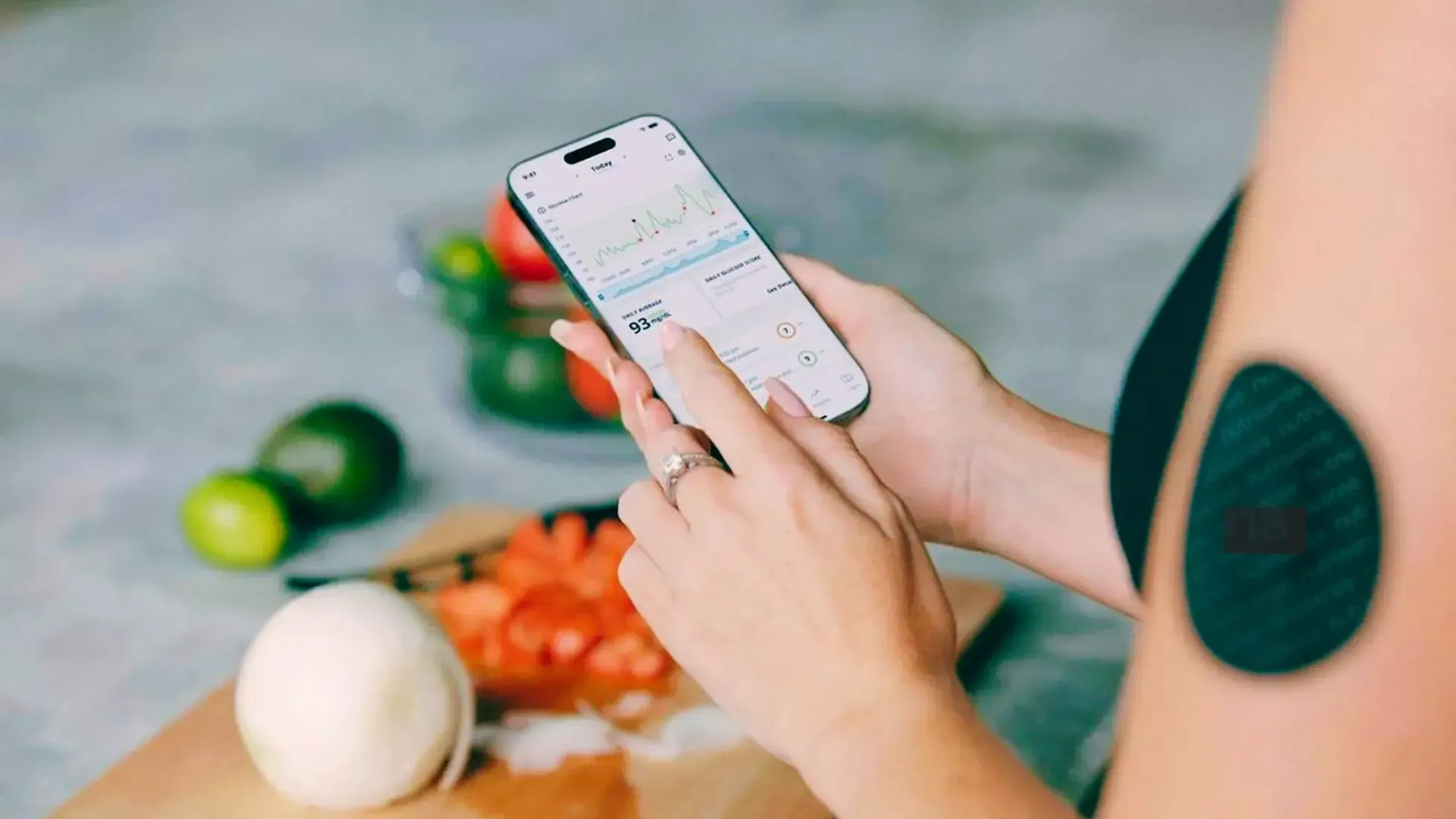
January.ai – Combines continuous glucose monitoring (CGM) with diet tracking and food image analysis to predict and manage individual blood glucose responses (6).
SnapCalorie – Uses AI-powered food recognition supported by human reviewers to refine the accuracy of logged meals, particularly in more complex cases (7).
HealthifyMe – Provides food image logging alongside an AI nutrition coach and human experts to deliver personalised nutrition advice at scale (8).
These are just a few examples as part of the all the image logging technologies and innovations we track on the Qina engine. These illustrate how image logging can sit at the intersection of nutrition, metabolic health, coaching and clinical care, with different models for integrating human expertise.
Trends and Expectations for the Future
In the past few years, advances in AI and deep learning have accelerated the adoption of image-based food recognition across the personalised nutrition landscape.
Image logging is rapidly moving from a differentiating feature to an expected capability in dietary tracking solutions. Leading players in nutrition, metabolic health, GLP-1 and digital therapeutics have already added image-based logging to their platforms. Adjacent segments, such as meal planning, chronic disease management, telehealth, women’s health, genetics-based solutions and connected devices, are also integrating image logging. As AI becomes embedded in everyday tools, expectations are shifting towards one-click or zero-friction experiences. Snapping an image to log a meal is increasingly seen as a must-have rather than a nice-to-have.
From a market perspective, image recognition is on a steep growth trajectory. The Image Recognition Market is forecast to grow from USD 57 billion in 2025 to USD 109 billion by 2030, fuelled by a 13.75% CAGR, driven by advances in communication technologies and consumer electronics. Major technology players such as Google, NVIDIA and AWS are shaping this landscape (9).
For solution providers in personalised nutrition and digital health, this market momentum brings both opportunity and responsibility: to design experiences that are not only seamless, but also safe, inclusive and clinically meaningful.
The Qina Take
At Qina, we see image logging as a powerful enabler but not a silver bullet. Price remains a major barrier.
Lower friction, richer data: Image logging can significantly reduce the burden of dietary tracking and provide more granular, real-world data than traditional methods.
From data to decisions: Its value depends on how well data are translated into actionable insights for individuals, clinicians and organisations.
Equity and inclusion: Diversity of datasets and cultural relevance of recommendations are essential to avoid widening health disparities.
Human + AI collaboration: The most impactful solutions are likely to blend automated recognition and insights with human expertise from dietitians, nutrition scientists and health coaches.
Responsible innovation: Privacy, consent, and transparent data use must be treated as design requirements, not afterthoughts.
For companies building or buying image logging capabilities, key questions include:
1. Which populations are we designing for, and are their foods and contexts well represented in our datasets?
2. How will we ensure that the outputs are interpretable and actionable for users and professionals?
3. What safeguards and governance frameworks are in place around image data and derived insights?
4. How does image logging integrate with other data streams (e.g CGM, wearables, lab data) to support more holistic, personalised care?
Finally incorporating image logging as a way to generate contextual data may be a cost-effective way to conduct real-world research.
Summary
Image logging, powered by advances in computer vision and machine learning, is reshaping dietary tracking by replacing manual logging with efficient, image-based systems. By allowing users to log meals with a simple photo, these systems can improve accuracy, support real-time feedback and increase adherence.
At the same time, important challenges remain. Dataset diversity, cultural representation, privacy, technical limitations and integration with broader health data all need careful attention.
Done well, image logging can support better dietary habits, empower individuals to take a more active role in their health and contribute to the prevention and management of diet-related diseases.
References
1. Dalakleidi, K., et al. 2022 – Applying Image-Based Food-Recognition Systems on Dietary Assessment: A Systematic Review - ScienceDirect
2. Liu et al, 2025 - Deep Learning in Food Image Recognition: A Comprehensive Review
3. Jbilou et al, 2025 - Article - Image-based food monitoring and dietary management for patients living with diabetes: a scoping review of calorie counting applications. - Nutrition Evidence Database
4. Almoraie et al, 2024 - Addressing nutritional issues and eating behaviours among university students: a narrative review | Nutrition Research Reviews | Cambridge Core
5. MealLogger – https://www.meallogger.com/
6. January.ai – https://www.january.ai/
7. SnapCalorie – https://www.snapcalorie.com/
8. HealthifyMe – https://www.healthifyme.com/in/
9. Research and Markets 2025 -https://www.researchandmarkets.com/reports/6099685/image-recognition-market-forecasts
Further reading:
Ming, Z., et al. 2018 – Food-photo-recognition-for-dietary-tracking-system-and-experiment.pdf
Gu et al, 2028 - Recent advances in convolutional neural networks - ScienceDirect